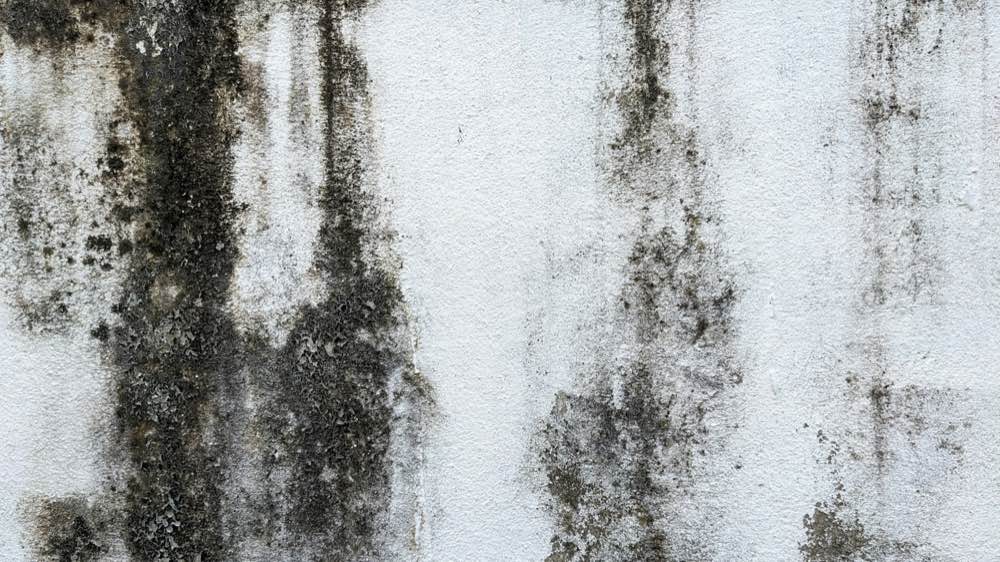
Mold in a dry climate?
Colorado Springs is dry outdoors, but mold doesn't need a humid climate. It needs moisture inside the house: a leaking pipe in a wall, a slow drip under a sink, a basement that flooded and didn't dry, a bathroom without a working fan, or condensation on cold surfaces in winter. Mold can start growing on wet drywall, wood, carpet backing, and insulation within a day or two. The EPA advises drying water-damaged areas within 24 to 48 hours to prevent mold growth.
That's why most mold calls here follow a water problem: a burst pipe, an appliance leak, a flooded basement, or a roof leak.
Signs you may have mold
- Black, green, gray, or white spots or fuzz on walls, ceilings, baseboards, or the back of cabinets.
- A musty, earthy smell that doesn't go away, often strongest in basements, closets, or under sinks.
- Peeling paint or warped drywall in an area that had a leak.
- Ongoing condensation on windows or cold walls.
- Allergy-type symptoms that improve when you leave the house. (Talk to a doctor about health questions.)
When you can handle it yourself
The EPA says that if the moldy area is less than about 10 square feet (roughly a 3 by 3 foot patch), you can usually handle it yourself. Its mold cleanup guide covers how: fix the water problem, scrub hard surfaces with detergent and water, dry completely, and throw away porous items like ceiling tiles and carpet that are moldy.
Call a professional when:
- The mold covers more than about 10 square feet.
- It's inside walls, in the HVAC system, or in insulation.
- It followed sewage or contaminated water. The EPA recommends a professional experienced with contaminated water in that case.
- Anyone in the house has asthma, allergies, a weakened immune system, or health concerns about mold.
- You keep cleaning it and it keeps coming back.
What to do right now
- Find and stop the moisture. Mold will return if the leak or humidity problem isn't fixed.
- Don't disturb large areas. Scraping or sanding dry mold can spread spores through the house.
- Don't just spray bleach and paint over it. Covering mold without removing it and fixing the moisture doesn't solve the problem.
- Keep the area closed off and avoid running fans that blow air from the moldy area into the rest of the house.
- Call (719) 722-2575 to get connected with a restoration company that handles mold.
How professional mold removal usually goes
- Inspection. The pro looks for visible growth, checks for hidden moisture with meters, and finds the source. Some situations call for testing; see mold inspection and testing.
- Moisture fix. The leak or moisture source gets fixed, often by a plumber or roofer.
- Containment. For larger jobs, plastic sheeting and negative air pressure keep spores from spreading.
- Removal. Moldy porous materials like drywall, insulation, and carpet are cut out and bagged. Hard surfaces and framing are cleaned.
- Air filtering. HEPA air scrubbers run during and after the work.
- Drying and checks. The area is dried and checked to make sure the moisture problem is gone.
- Rebuild. New drywall, insulation, and finishes.
"Mold removal" and "mold remediation" are used almost interchangeably. Remediation is the more formal term for the full process, including containment and fixing the cause.
What affects the price
The size of the affected area, where it is (an open basement wall vs. inside an HVAC duct or attic), how much material has to be removed, containment needs, whether testing is done, and how much rebuilding follows. See our mold removal cost guide.
Insurance notes
Many homeowners policies cover mold only when it results from a covered water event, like a sudden pipe burst, and some cap mold coverage at a set amount. Mold from long-term leaks, humidity, or maintenance issues is often excluded. This is general information; check your policy and ask your insurer.
Frequently asked questions
Is black mold more dangerous than other mold?
The CDC says there's no test that proves a link between Stachybotrys chartarum (often called "black mold") and particular health symptoms, and it recommends removing any mold regardless of type. See our guide: is black mold dangerous?
Do I need a mold test before removal?
Often not. If you can see mold, the priority is removing it and fixing the moisture. Testing helps when you suspect hidden mold or need documentation.
Will mold come back?
It will if the moisture comes back. Fixing the source and drying the area properly is what keeps it away.
Can I stay home during mold removal?
For small, contained jobs, usually. For large jobs or if anyone has health concerns, ask the company and your doctor.