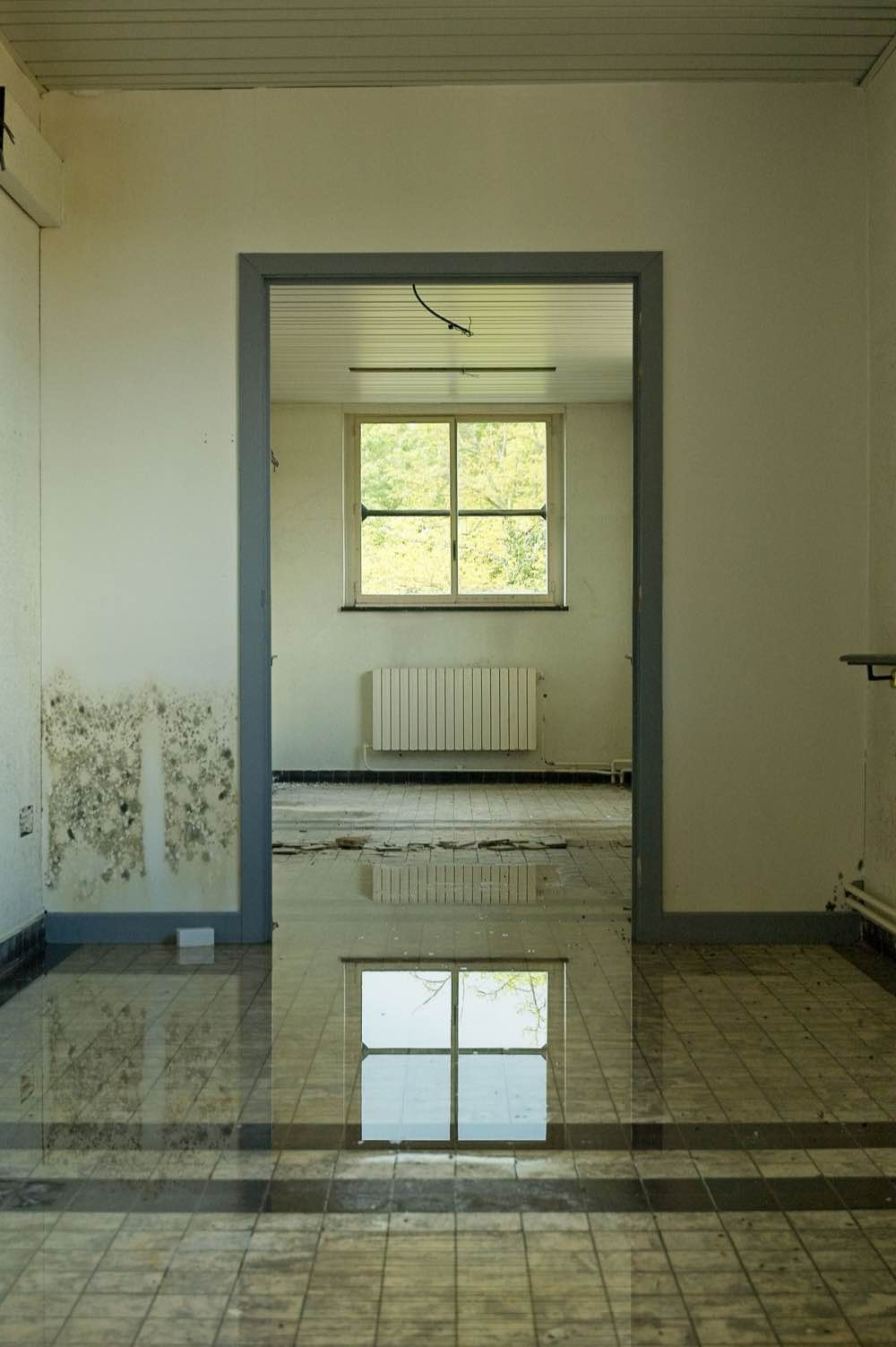
What water damage restoration covers
Water damage restoration is the whole job of putting a home back to normal after water got where it shouldn't. It usually has two halves. The first is mitigation: stopping the water, pulling it out, removing what can't be saved, and drying the building with commercial equipment. The second is repair: replacing drywall, flooring, trim, cabinets, and paint once everything is dry.
Some companies do both halves. Others do only mitigation and hand you off to a contractor for repairs. Ask which you're getting when you call for a quote.
Signs you need more than a mop and a fan
A cup of water on a tile floor is a towel job. Call a pro when you see:
- Water that soaked into carpet and pad, or spread under baseboards into the next room.
- Wet drywall, especially if it feels soft or the paint is bubbling.
- A ceiling stain that keeps growing, or a sagging ceiling.
- Water from a toilet, floor drain, or sewer line (see sewage backup cleanup).
- Standing water in a basement or crawl space.
- A musty smell a few days after a leak, which can mean hidden moisture.
The trouble with water is what you can't see. It wicks up drywall, runs along the top of the slab, and soaks into the bottom plates of walls. Pros use moisture meters and thermal cameras to find where it went.
What to do right now
- Shut off the water. Find the main shutoff (often in the basement or near where the line enters the house) and close it. If the leak is from a water heater, also shut its supply valve.
- Think about power. If water is near outlets, cords, or the electrical panel, don't walk through it. The CDC warns against wading through standing water to reach the main power switch and advises having an electrician check the system before turning power back on (CDC flood safety).
- Document everything. Photos and video of the water, the source, and damaged items, before cleanup starts.
- Move what you can. Lift furniture onto blocks or foil, pull rugs, and get electronics and papers out of the wet area.
- Call your insurer to report the loss, and call (719) 722-2575 to get connected with a restoration company.
Don't run a regular household vacuum on wet floors, and don't turn the heat way up hoping it will dry things. Heat without airflow and dehumidification can make humidity worse.
How the job usually goes
- Inspection. The pro finds the source, maps how far the water spread with a moisture meter, and decides what kind of water it was. The industry uses Category 1, 2, and 3 to describe how clean or contaminated water is. Those categories come from the IICRC S500 standard for water damage restoration.
- Extraction. Truck-mounted or portable extractors pull water out of carpet, pad, and hard floors. This step removes far more water than drying alone.
- Removal. Wet carpet pad is usually thrown away. Drywall may be cut a foot or two above the water line, and baseboards pulled so walls can dry.
- Drying. Air movers and dehumidifiers run for several days. See water extraction and drying for how this works.
- Monitoring. The crew checks moisture readings, often daily, until materials reach normal dry levels. Good companies write these readings down. Ask for them, since insurers often want them too.
- Repairs. New drywall, paint, flooring, and trim once the structure is dry.
How long does it take?
Drying alone often takes a few days, depending on how much got wet and what it's made of. Hardwood floors and plaster can take longer. Repairs add more time, depending on how much was removed and how quickly materials can be ordered. The dry climate here helps once the job is under control, but it doesn't replace proper drying equipment inside walls and under floors.
What affects the price
The main cost drivers are the area that got wet, the water category (clean water costs less to handle than sewage), how long the water sat before anyone started, how many materials had to be removed, how many days equipment runs, and how much rebuilding follows. Our water damage restoration cost guide explains each one.
Insurance notes
Many homeowners policies cover sudden and accidental water damage, like a pipe that bursts, but not damage from long-term leaks or poor maintenance. Flood from rising surface water usually needs separate flood insurance; FloodSmart, the National Flood Insurance Program site, notes that most homeowners insurance does not cover flood damage. Sewer backup is often covered only with an endorsement. This is general information, not advice. Read your policy, and check with your insurer or agent. The Colorado Division of Insurance has consumer help if you run into trouble with a claim. More in our insurance guide.
Frequently asked questions
Can I dry it out myself?
For a small clean-water spill caught right away on a hard floor, often yes. Once water has soaked into carpet pad, drywall, or subfloor, or reached a basement, professional extraction and drying equipment makes a big difference. Hidden moisture is what leads to mold.
Do I have to wait for the insurance adjuster?
Usually not for the urgent part. Most policies expect you to take reasonable steps to prevent more damage. Document everything first, report the claim, and ask your insurer how they want you to proceed.
Will I have to move out?
Most water jobs don't require it. Large losses, sewage in living areas, or a home without a working kitchen or bathroom can. Some policies include additional living expenses, so ask your insurer.
How do I know the house is really dry?
Ask the company for its moisture readings and what "dry" means for each material. Don't let repairs start until readings show the structure is back to normal.