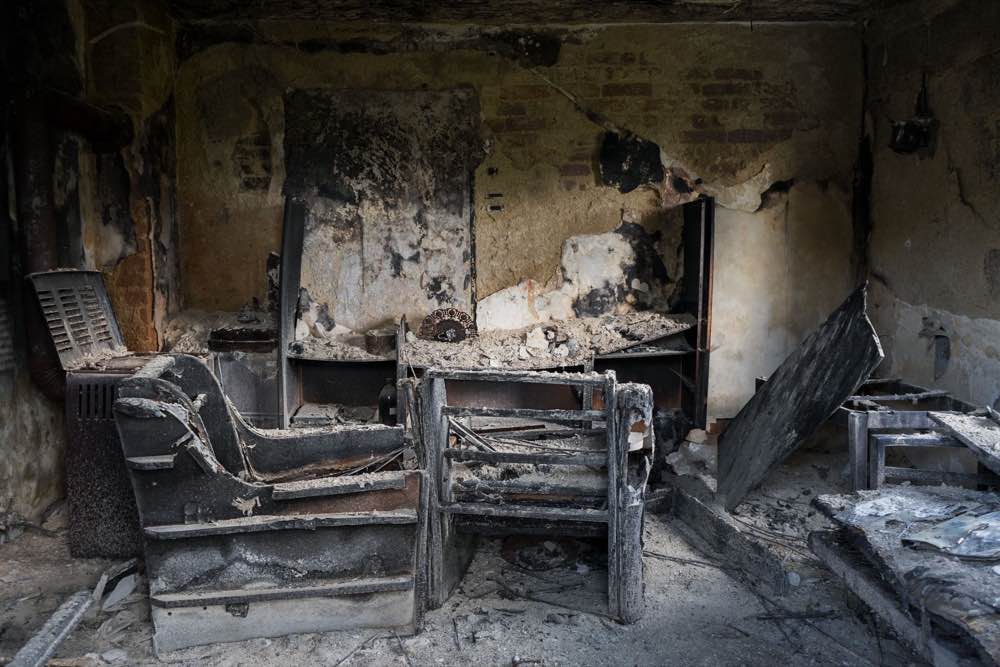
Why smoke damage spreads so far
Smoke travels through the whole house, carried by heat and the HVAC system. It finds its way into closets, cabinets, attics, wall cavities, and ductwork. As it cools, it leaves soot and residue on surfaces and gets absorbed into fabrics, carpet, insulation, and drywall. That's why a small fire in one room can leave a whole house smelling of smoke.
Smoke damage can come from:
- A fire in your own home, even a small kitchen or electrical fire.
- A fire in an attached unit, like a neighboring townhome or apartment.
- A furnace puffback, which can coat a house in fine soot.
- Wildfire smoke drifting in from nearby fires. See wildfire smoke damage.
Signs of smoke damage
- A smoke smell that returns after airing out, often stronger on warm days or when the heat runs.
- Gray, black, or yellow film on walls and ceilings, especially above heat sources and near the ceiling.
- Dark outlines around outlets and light switches.
- Discolored grout, plastics, or metal.
- Soot around HVAC vents and on filters.
What to do right now
- Make sure it's safe to be in the home. After a fire, follow the fire department.
- Change your HVAC filter and limit running the system until it's checked, since it can spread soot.
- Don't wipe or scrub soot off walls or furniture with water or household cleaners. Many soots smear and stain when wet.
- Don't use fragrance sprays to cover odor; they mask it and can make it harder to remove.
- Open windows if the outdoor air is clean.
- Bag clothes and textiles you want cleaned, and ask the restoration company about cleaning them.
- Call (719) 722-2575 to get connected with a restoration company.
Types of soot (and why it matters)
What burned affects how the residue behaves:
- Dry, powdery soot from fast, hot fires of paper and wood. Often easier to vacuum and clean.
- Wet, smeary soot from slow, smoldering fires and burning plastics and rubber. Sticky, smears easily, and has a strong odor.
- Protein residue from kitchen fires (food burning). Nearly invisible but discolors paint and has a strong, persistent smell.
- Fine soot from a furnace puffback, which can coat surfaces throughout the house.
A pro tests surfaces to choose the right cleaning method. Using the wrong one can set the stain.
How the job usually goes
- Assessment of where smoke went, including closets, attic, and ductwork.
- Dry cleaning. HEPA vacuuming and dry chemical sponges lift loose soot before anything wet touches it.
- Wet cleaning of walls, ceilings, cabinets, and hard surfaces with cleaners matched to the soot type.
- Contents cleaning. Clothing, textiles, electronics, and hard goods, sometimes packed out and cleaned off-site.
- HVAC cleaning so the system stops recirculating soot and odor.
- Odor removal. After cleaning, methods like thermal fogging, hydroxyl generators, or ozone (unoccupied homes only) may be used. Sealing primers lock in remaining odor on cleaned surfaces before painting.
- Repaint and replace what couldn't be cleaned, like insulation or carpet.
What affects the price
How far smoke traveled, type of soot, square footage of surfaces, the amount of contents to clean, HVAC cleaning, odor treatment, and repainting.
Insurance notes
Smoke damage from a fire is commonly covered under homeowners policies, including smoke from a fire next door. Coverage for wildfire smoke can depend on your policy and how the damage is documented. This is general information; check with your insurer. The Colorado Division of Insurance has consumer resources.
Frequently asked questions
Will the smoke smell go away by itself?
Sometimes faint odor fades with airing out. Odor absorbed into drywall, insulation, carpet, and ductwork usually doesn't go away without cleaning.
Can I just paint over smoke-stained walls?
Not without cleaning first and using a sealing primer. Otherwise stains and odor bleed through.
Is ozone safe?
Ozone can irritate lungs and should only be used in an unoccupied space by people who know how to use it. The EPA has information on ozone generators sold as air cleaners.
What about my clothes?
Many smoke-damaged clothes can be cleaned. Don't wash them with regular detergent first, since heat and the wrong products can set odor. Ask the restoration company about textile cleaning.